

Osaka itinerary: 2, 3 or 5 days
Osaka is Japan's third-largest city and its most food-minded one: locals talk of kuidaore, eating until you drop. It has fewer temples than Kyoto and more street food, neon and big city views. The city has two hubs. Minami, around Namba, holds Dotonbori, Shinsaibashi and Kuromon Market. Kita, around Umeda and Osaka Station, is the district of office towers, department stores and the Umeda Sky Building. Osaka Castle sits between the two, and the bay area to the west has the aquarium and Universal Studios Japan. The Midosuji subway line runs north to south through Umeda, Namba and Tennoji, so most stops are a short ride apart. Many of the best moments are free: walking Dotonbori at night, browsing covered shopping streets, eating at market stalls. Observation decks and the aquarium are the main paid sights. Kyoto, Nara and Kobe are all close enough by train for day trips. TripGoat lists 68 places in Osaka if you want to change the plan.
Pick your dates and budget: TripGoat turns this itinerary into your own day-by-day plan, with the stops above, and you can change it as you like. Free.
When to go
The best months to visit Osaka are March through September. Cherry blossoms usually open in late March or early April, the busiest time of year, and Osaka Castle Park is a favourite place to see them. May is warm and pleasant. June brings the rainy season, then July and August are hot and humid, so keep outdoor sights for mornings and evenings. July is also the month of the Tenjin Matsuri, one of Japan's biggest festivals. September stays warm and can bring typhoons.
How long to stay
Four days is the recommended length for Osaka, and two days is the minimum for Dotonbori, the castle and one observation deck. With up to ten days you can add Universal Studios Japan and day trips to Kyoto, Nara or Kobe. Budget about $800 per person per week. Streets and markets are free; the aquarium (about $20) and the observation decks ($10 to $13) are the main entry costs, and karting (about $80) is the big extra.
Day-by-day itinerary
The plan runs over five days, each built around one area so stops sit close together. Days 1 and 2 make a 2-day trip with Dotonbori, two towers and the bay. Days 1 to 3 make a 3-day trip by adding Osaka Castle and Umeda. Days 1 to 4 match the recommended four days with a food day in Namba, and day 5 adds karting, a club and kitchenware shopping.
Day 1: Tennoji, Shinsekai and Dotonbori
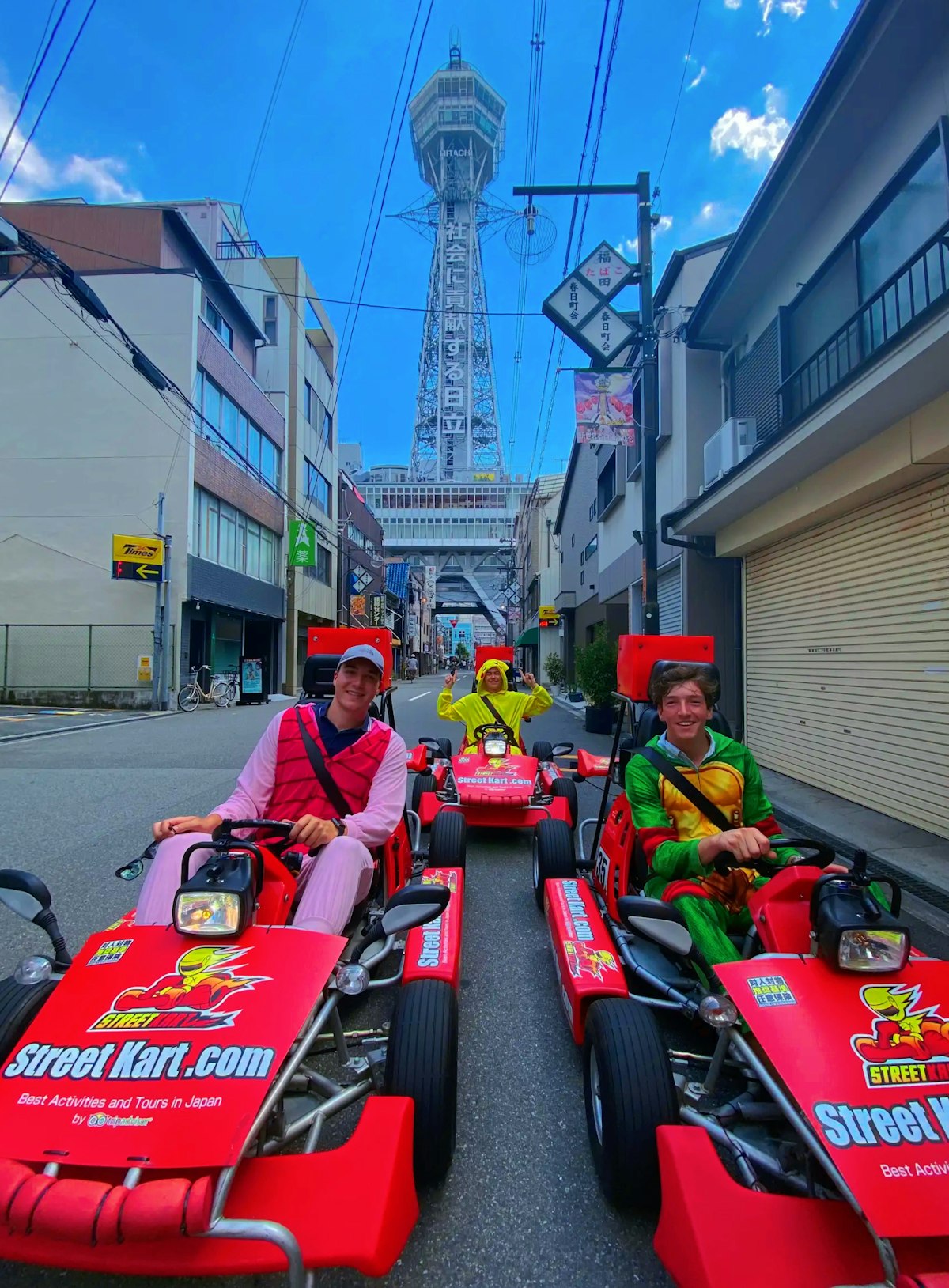
Start in the south at the Abeno Harukas observatory (about $13), at the top of a 300-metre tower beside Tennoji Station. Go in the morning, when the air is often clearer. Walk about 950 m to Tsutenkaku (about $7), the retro tower at the heart of Shinsekai, and stay for a kushikatsu lunch in the streets around it. Then head about 1.9 km north to Dotonbori, on foot or by subway. Give it the rest of the afternoon and the evening: the canal, the giant shop signs and the food stalls look their best after dark.


Day 2: Osaka Bay, Universal City and Shinsaibashi
Spend the morning on the bay at the Osaka Aquarium Kaiyukan (about $20). Allow 2.5 hours, as the route spirals down around a huge central tank. The Tempozan Ferris Wheel is about 270 m away, and its 15-minute ride (about $5) looks out over the bay. Universal City Walk lies about 1.5 km across the water; a small ferry links the two shores, or you can go by train. Its restaurants and shops outside the theme park gates are free to wander. In the evening, ride back to the centre for Shinsaibashi-suji, a long covered shopping arcade that ends at Dotonbori.


Day 3: Osaka Castle, Ebisu Bridge and Umeda
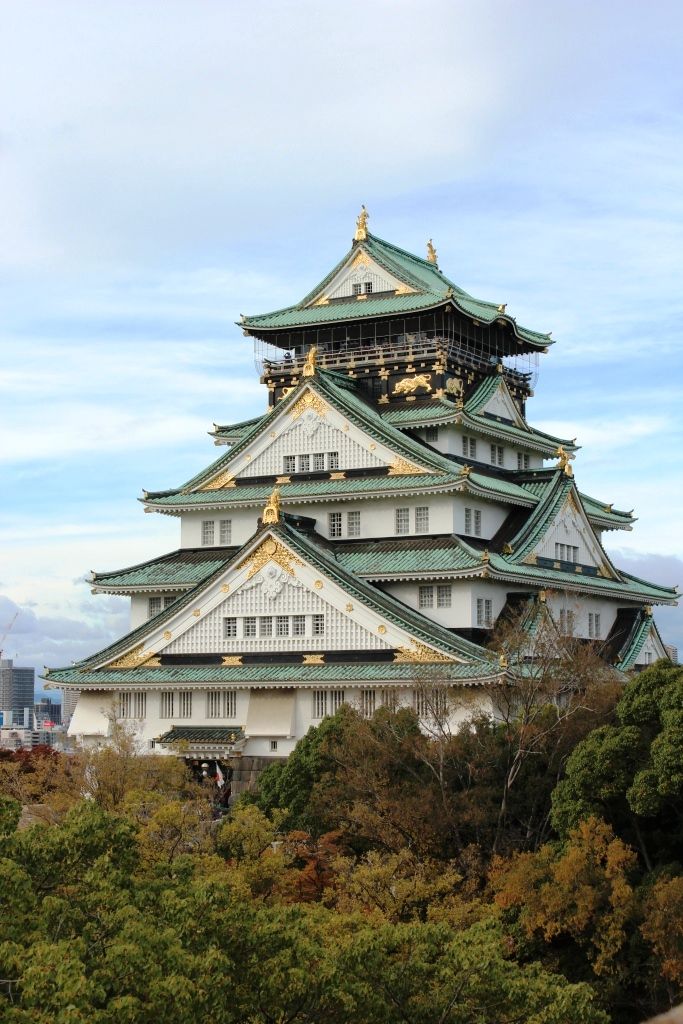
Begin at Osaka Castle (about $6). The keep is a modern reconstruction with a history museum inside and a viewing floor at the top. The park around it is free, and you can easily spend two hours or more walking past moats, stone walls and, in spring, cherry trees. In the afternoon, travel about 3 km to Namba and stand on Ebisu Bridge for the classic photo of the Glico running man sign. Finish at the Kuchu Teien Observatory (about $10) in Umeda, a short ride north on the Midosuji line. Its open-air rooftop is a good place for sunset.


Day 4: Kuromon Market, Bunraku and Hozen-ji
Today stays in one corner of Namba, and every stop is a short walk from the last. Come to Kuromon Market in the morning, when stalls are fully stocked, and graze on grilled seafood, skewers and fruit for brunch. The National Bunraku Theater is about 300 m away. Bunraku is Osaka's traditional puppet theatre, with three puppeteers working each main figure; performances run in seasons, so check the programme first. Walk about 550 m to Hozenji Yokocho, a stone-paved lane of small restaurants. Hozen-ji Temple and its moss-covered statue are only 30 m further.


Day 5: Street karting, Ammona and Doguyasuji
The last day is lighter and more playful. Street Kart Osaka (about $80) takes you through the city in go-karts and costumes for about 2.5 hours. You need a driving licence that Japan accepts, which for most visitors means an International Driving Permit arranged before leaving home. Ammona, a nightclub about 900 m away, is the day's night out; clubs open late, so check its events first. Sennichimae Doguyasuji, about 800 m from the club, is a covered street of kitchenware shops selling knives and plastic food models. Its shops keep daytime hours, so if your kart slot is late, browse it first.


Good to know
- Get an ICOCA or another IC card and top it up: it works on the subway, JR trains and buses, and in many convenience stores.
- On escalators in Osaka, people stand on the right and walk on the left, the opposite of Tokyo.
- Carry some cash for market stalls, small restaurants and street food, as not every vendor takes cards.
- Buy Universal Studios Japan tickets online in advance, and avoid weekends and Japanese holidays, when lines are longest.
- In kushikatsu restaurants, dip each skewer in the shared sauce only once; double-dipping is not allowed.
Pick your dates and budget: TripGoat turns this itinerary into your own day-by-day plan, with the stops above, and you can change it as you like. Free.